
The Glock Before Glock: Smith & Wesson’s Model 10
When it comes to historical American firearms, the Smith & Wesson Model 10 K-frame revolver in .38 Special is not only iconic, but instantly recognizable to generations of shooters—serving for decades as the dependable duty sidearm of American law enforcement. Many “old-timers” cut their teeth on these revolvers, and for much of the 20th century they were synonymous with police service.
Originally known as the Smith & Wesson Military & Police, the revolver would later become the Model 10 when Smith & Wesson adopted model numbers in 1957.
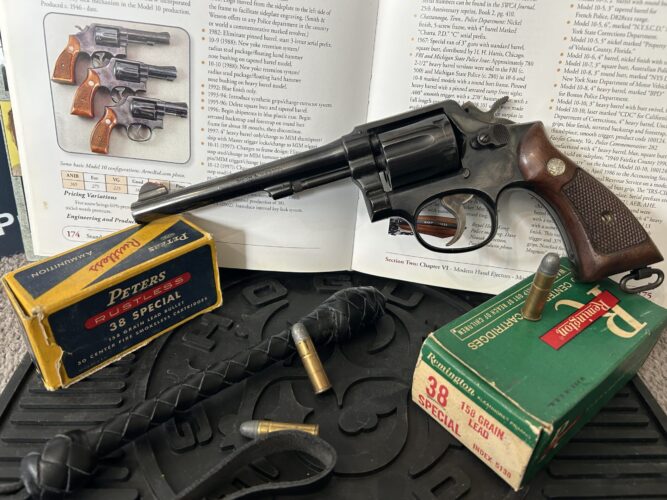
Countless federal, state, and local agencies—as well as militaries around the world—issued the Model 10 or one of its variants, making it a true global standard. As noted by Supica and Nahas in The Standard Catalog of Smith & Wesson, “By 1899…the first K-frame .38 caliber Smith & Wesson Hand Ejector was made. It became the revolver that would define the police handgun for the next 100 years.”
The Model 10 remains in limited production today, with Smith & Wesson continuing to fulfill periodic orders. It is still issued in some parts of the world—a testament to its longevity. More than 6,000,000 have been produced, and it is often noted that at one point, Smith & Wesson manufactured more Model 10’s than all other models combined. Several countries produced copies or unlicensed clones, further underscoring its widespread influence.
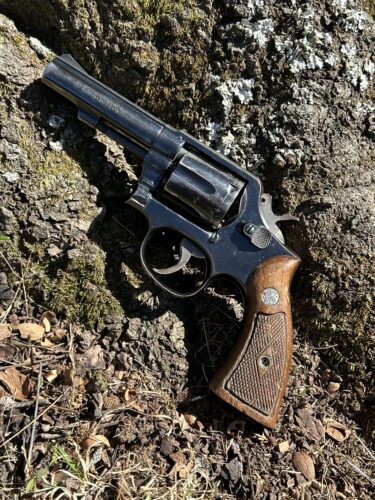
I had the opportunity to visit the Republic of Ireland in 2013, where I spoke with members of An Garda Síochána, the Irish national police service. At the time, they were transitioning from the Model 10 in .38 Special to the SIG Sauer P226 in 9×19mm. Even in the United States, revolvers held on longer than many realize. As late as 2018, fewer than 50 NYPD officers were still carrying revolvers, including some Model 10s.
Attempting to catalog every variation, engineering change, and configuration of the Model 10 would be a daunting task. Numerous related models exist, differing in caliber, finish, barrel length, and features. Among the most notable is the Victory Model, a wartime variant that helped sustain Smith & Wesson’s production during World War II and remains a favorite among collectors today. The Model 10 also served as the foundation for many later Smith & Wesson revolver designs.
In 1957, Smith & Wesson began stamping model numbers on their revolvers. Firearms produced after this change have the model designation marked in the yoke cut, while earlier examples are generally referred to as “pre-Model 10” revolvers.
The Model 10’s enduring appeal lies in its simplicity, reliability, and shootability. In many ways, it filled a role similar to that of the modern Glock: a dependable, no-nonsense service weapon trusted by professionals. Well-worn examples may show their age externally, yet continue to deliver impressive accuracy and reliability. Durable and forgiving, they are difficult to wear out under normal use.
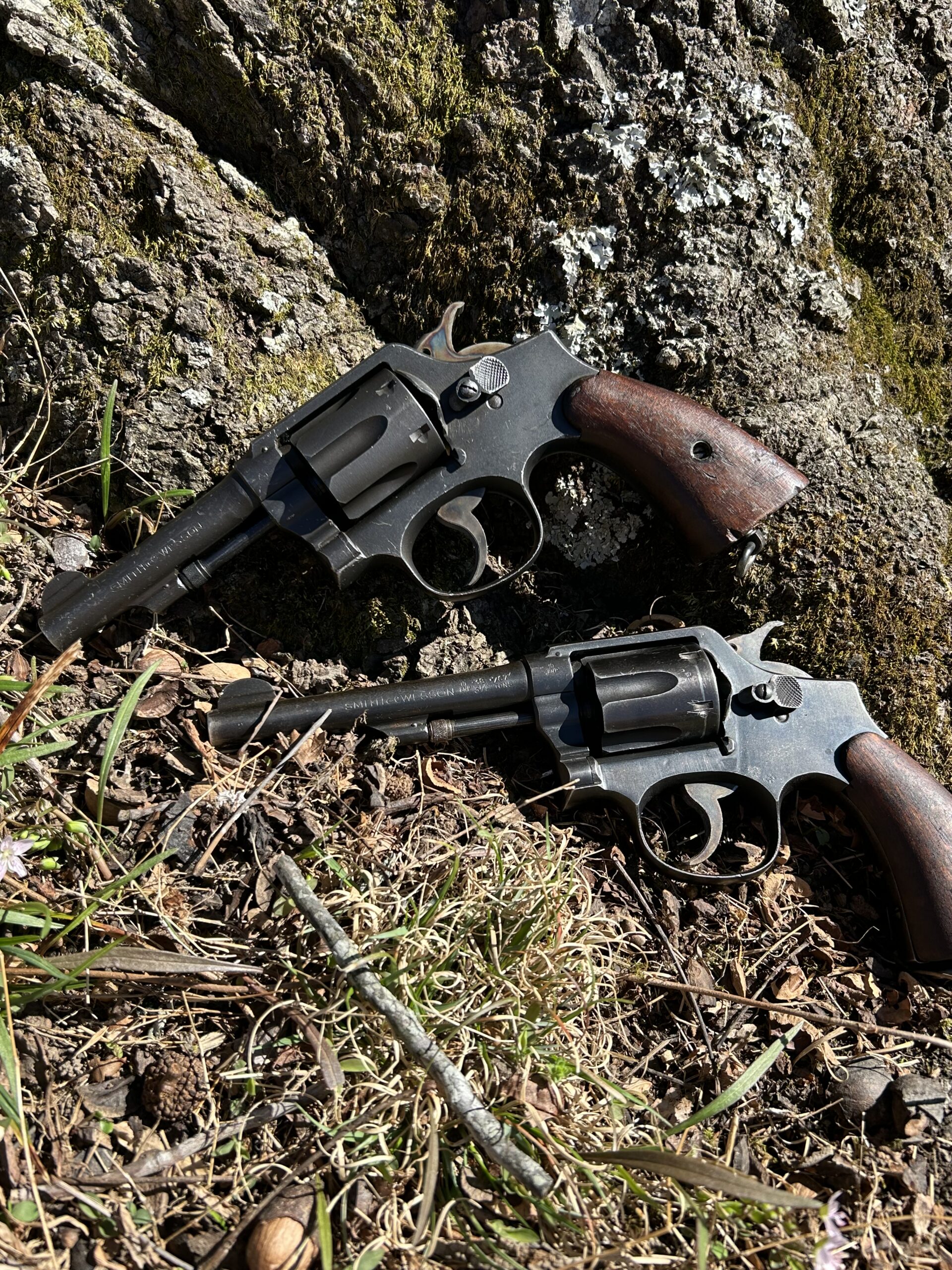
Having spent time with a number of these revolvers over the years, I would not feel under-equipped relying on a Model 10 in a defensive role—particularly when paired with a quality modern load. More than a relic of the past, the Model 10 remains a practical reminder of an era when simplicity and reliability set the standard.
If you take your time and educate yourself through reputable people and books, you can still locate an excellent and dependable used Model 10 for a fair price. As with anything else, be careful, take your time, and don’t make an impulse buy. Pay attention to overall mechanical condition—lockup, timing, and bore condition are often more important than cosmetic wear. The Model 10 is also an excellent first gun for almost any shooter, particularly when paired with reduced‑recoil loads that make it comfortable and easy to control. Traditional .38 Special wadcutter loads, long favored for target shooting and training, are especially soft‑shooting and accurate, making them ideal for new shooters learning the fundamentals. With a little patience, you can walk away with a trusted and dependable Model 10 that could very well last you—or your heirs—a lifetime.
About the Author: J.B. Cohen