From Civilian to Cadet: Lessons From the Police Academy Part 2
by Mary Ardolino
Halfway through the Academy, I began to feel the time fly by. One day rolled into
the next. Academics were still prevalent, but we began to heavily focus on tactics, hand-
to-hand combat, firearms skills and driving. Now, while I would love to boast about my
skills, I was quite average in the beginning.
During hand-to-hand, I learned very quickly I was at a disadvantage. While I do
believe females can achieve the same accomplishments as men, it did show me I would
have to do things differently. I learned that going for the legs was easiest and most
efficent due to my short stature. During a training excercise, I injured my shoulder when
someone landed on the shoulder blade and pushed down into the mat. I was out for two
weeks and it took me a bit of time to catch up.
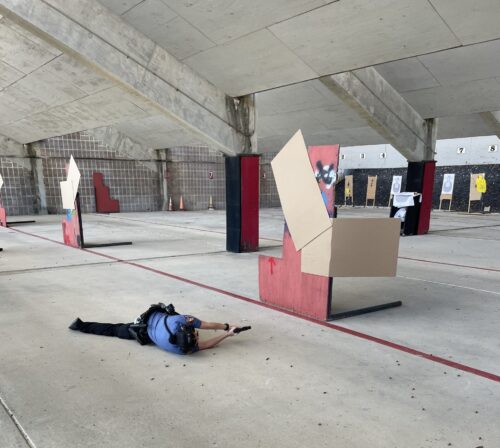
I have spent my whole life growing up around firearms, so when that portion
rolled around I was able to breeze through. The way I was taught growing up and in the
Academy was different, so I had to balance both ways and see what worked best for
me. Being able to shoot at a range, and when your life depends on it is different. They
managed to teach us stress and adrenaline, while in a controlled environment. That
training is something I still refer to.
Now driving is where I struggled slightly for some odd reason. Police often drive
in every condition, and not always as safe as can be. When you are driving to someone
whose life is in danger, you are going very fast and taking hard turns, and maybe you’re
driving on wet asphalt. They teach you to “trust the car”, which I did not quite understand because it is an inhuman object. The courses are called EVOC and every department or training agency tend to have a version of it that they have created.
It is usually timed and mapped out with cones and other various road objects. Driving was
fun but it was probably my biggest learning curve in the Academy. I did eventually learn
and now I drive much more efficently while on duty.
All of these things taught me to trust my training and equipment. It’s a phrase you
commonly hear, and I began to grasp it well during this time. For instance, when I am
running code (lights and sirens) I trust that my training will kick in while driving. When I
am administering first aid to a victim I trust that my medical supplies and tactical first aid
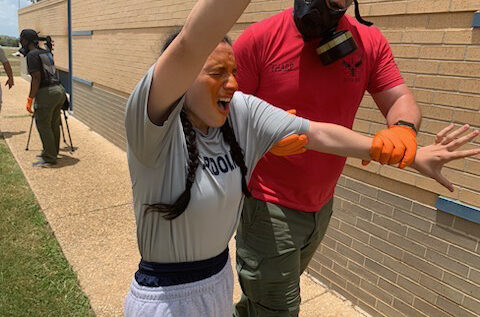
I learned will do what it is intended to do. If I were in a situation where gas bombs are
deployed and I had to use my gas mask, I would feel much more anxiety if I had not
tested it and experienced that it will protect my lungs, allowing me to continue my job.
These months of all this training combined began to really show me what it would
be like physically and mentally in this job. You are never truly “off.” There is a constant
level of awareness that comes with this job. In today’s world that is not a bad thing, but it
is important to learn how to manage and mitigate so you do not burn out.
And while I was learning how to become a police officer, I was also learning how
to be a mom.
At this point, my child was almost two years old, and I was constantly running
around trying to balance everything. I mentioned in my last article that I missed some
sentimental moments in his life in order to pursue this career. Some people may
disagree with that decision, and I understand why. But I made that sacrifice—and I
continue to make sacrifices—because I want to be there when he is older. I was awake from 5am-11pm or 12am every single night. I’m sure there are people who would say they
do not have time to workout, or have free time, or parent or study while doing this. If I
can do it with all I had going on, then anyone can. If you want it bad enough, you can
make it happen.
am firm believer that in order to do a job where you risk your life
everyday, you must have something to push you through. If you are in the fight for my
life, your mind will need something to fight back for, something to believe in. It has been
the biggest lesson I have learned thus far.
About the Author: Mary A. Ardolino