The Beginner’s Guide to the 1911A1 Pistol, Part One
By Dan Kemp
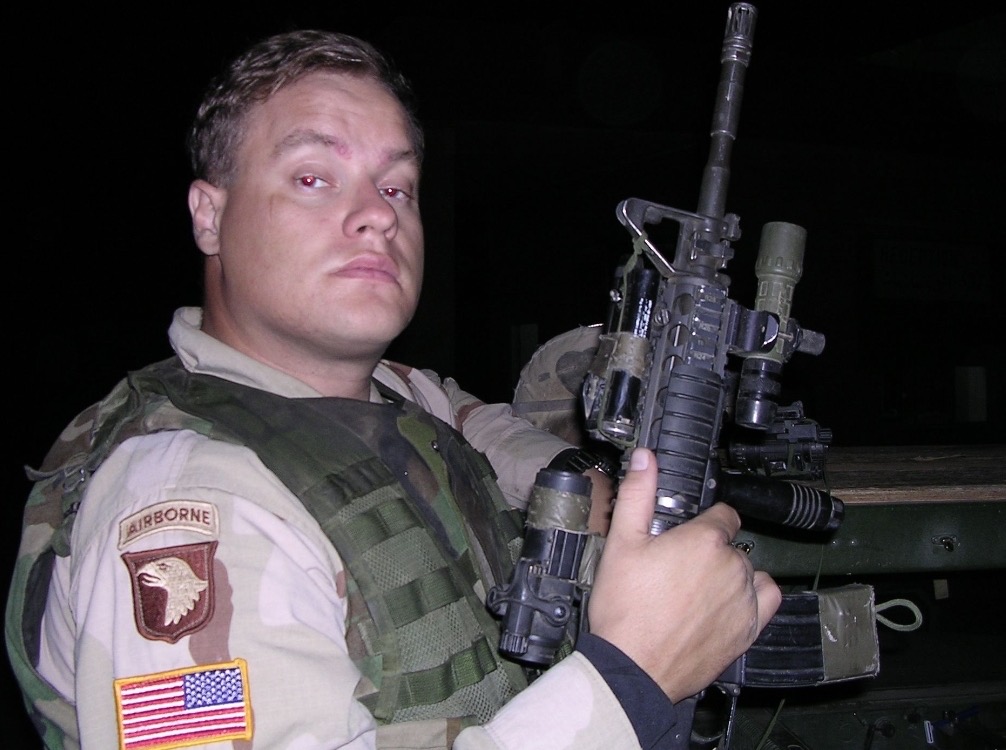
In 2003, me and forty thousand of my closest friends went off to go invade Iraq because George W. Bush said so and he was the guy who signed our paychecks. Our deployment orders gave us a long list of things we were allowed or not allowed to bring. Some of these things sort of made sense (no personal automobiles), some of them didn’t. No Personal Firearms was clearly stated. Personally, I thought this was bullshit. I was a Spec4 in a rifle company in the 101st Airborne, and we were, according to plan, going to be fighting building to building capturing Baghdad. Urban combat is a nasty and up-close business, even in all the rehearsals we’d been conducting, and having a backup piece seemed like a really sensible idea to me. The opinions of some chair-warmer at CENTCOM Headquarters didn’t really enter my thought process. They weren’t going to be betting their life on clearing the next room.
To make a long story short, though I’ll explain in more detail later, I did get a personal handgun in theater, and even more interestingly managed to get it out at the end. It was what most people would recognize as a “Colt 45”, the Model 1911A1 in .45ACP that was standard American military issue from 1911 until the mid-1980’s. Some units kept them even later- the National Guard unit I was in during my college years had them until 1996.
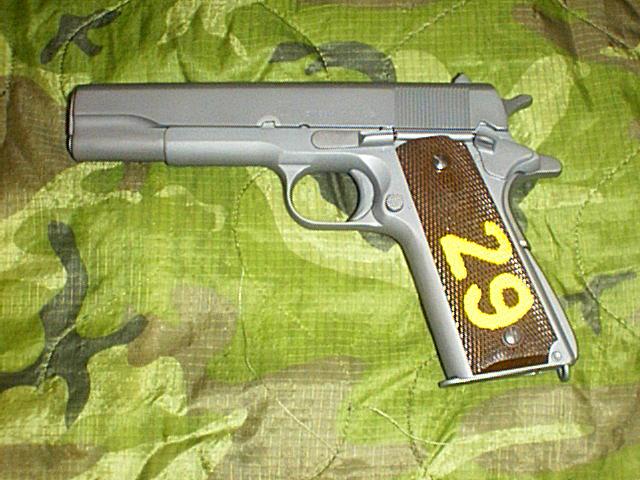
Mine was made in 1943. It wasn’t a Colt, but was a Union Switch and Signal slide on a Remington-Rand frame. Mine came out of a Georgia pawn shop for three hundred and fifty bucks (that was 2002 prices) including shipping to my FFL. Another hundred and fifty in gunsmithing saw it back in proper USGI condition. That a company that made (and still does make) railroad equipment in Swissvale, Pennsylvania and another that made typewriters in Syracuse, New York made pistols shouldn’t surprise anyone who studies the matter. The WWII industrial mobilization had any company with experience in machining small metal bits conscripted into the firearms business. Rock-Ola Jukebox and International Business Machines were among those companies making M1 carbines.
For all the time I carried it, it was only drawn in anger three times, and never needed to be fired when it was. The Iraqis were used to a smaller caliber pistol, and seeing the front end of that 1911 never failed to make them very polite. It looks like the drain pipe to Hell. The locals were far more scared of handguns than rifles, and it wasn’t until a little later one of our Iraqi interpreters told me why. Anyone senior enough to carry a pistol in Iraqi law enforcement or their military was also senior enough to have summary execution authority. One fellow we were arresting was threatening my life and the life of my family in no uncertain terms, scoffing at our fully tricked M4 carbines and M203 grenade launchers. When he saw my .45, he instead hit his knees and thrust his cuffed hands in the air, pleading “Mister, mister, no, please, I have baby!” in about half a second. Don Burgett, who served in A Company of the 506th Parachute Infantry in WWII, noted that .45’s had similar effects sixty years before on uncooperative Germans.
All this was just fine with me. I wasn’t out to kill anyone who didn’t need killing. That sort of thing is wasteful of human life, pisses off the population you’re trying to influence, and, being really cynical about it, would waste ammunition I might need later. Unless I could find a SOCOM unit that had .45s and could get some ammo from them, the 49 rounds I brought in seven magazines were all I had. There were no local gun stores that stocked the caliber and “Big Army” had given up on the .45 twenty years before.
Some people dismiss backup pistols as special ops-inspired bullshit, but one excellent regular Army story underscores how important it is to have a Plan B weapon. On the second tour, I was the interpreter manager for Headquarters Company. I was handing things over to my replacement from the 10th Mountain Division. He was starting his third tour. On his first, he’d been in Afghanistan with the 25th Infantry Division’s 3rd Brigade. Over there in the hills, stripped and unarmored trucks are the only thing that will make it up those dirt trails. While on a mounted patrol, his truck was hit by an RPG. He and his gunner were both thrown from the vehicle, and his driver was still in the vehicle unconscious. His rifle had stopped some RPG shrapnel that otherwise might have punched holes in him but reduced it to a collection of broken parts. He realized this when a local kid, no more than 10 or 12, ran up and murdered the gunner at point blank range with an AK-47. After first reflexively trying and failing, to shoot the kid with his broken M4, he drew his Beretta 9mm and killed the AK-toting juvenile delinquent. While his pistol work came too late to save his gunner, it stopped his driver and himself from being next.
About the Author: Dan Kemp