
It’s Not Just Shooting:
by Greg Chabot
You have a tricked-out weapon and top tier gear. You go the range and practice with your buddies and sure, you can shoot fast and do a mag change just like the tactifools on social media. Think you’re ready for a SHTF scenario? I got news for you: You’re not even close.
Sorry to break it to you but there is more to surviving dangerous scenarios besides being able to shoot. Teamwork is also an important part of surviving dangerous scenarios.
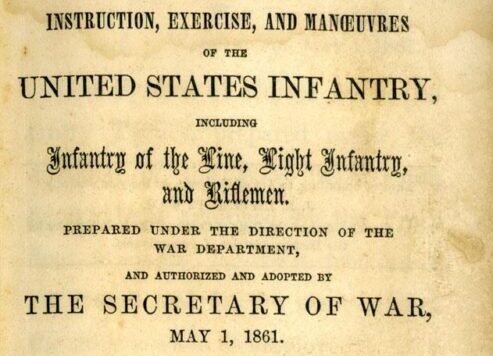
A team that works together has the potential to come out on top of a dangerous situation. Part of that is knowing/practicing some basic team formations. I’m not going to rewrite the infantry manual for you. My goal is to go over some of the basic formations a team can use regardless of numbers.
Why Team up?
I was guilty like many people of thinking during a SHTF situation. I can grab my gear and head into the woods like Rambo. Granted it makes for an exciting movie but in reality, you’re not going to make it against organized foes. Like it or not you will have to work with others to survive. Whether that is your neighbors or like-minded people in your area. Patrolling/ scouting and intelligence gathering will be a big part of staying safe and secure. Combat formations are an important part of good fieldcraft/tactics.
Basic Formations.
I’m going to focus on the four-man fireteam to keep it simple. Most of these formations will work with any number of men. During my Seabee days we would use the four-man fireteam like the Marines. In my Army days it was three-man teams. From my own combat experience, I preferred the four-man team as it was more versatile in my opinion. Many times, on missions, we would bring extra men to boost our teams which was a game changer on the streets of Iraq.
Note: This material is readily available online, I made changes that would better serve a civilian fire team. I encourage readers to do their own research to find what will work for them. Your brain is your best weapon bar none.
Combat spread.
I’ll cover this quickly, depending on terrain, a combat spread is 10-15 meters per man. In thick brush typically 5-10 meters or as close as 3-5 meters at night or in very rough terrain. Spread is important as it prevents the enemy from taking out a whole team that is clustered together with indirect fire or a belt fed weapon. Remember this isn’t set in stone, do your spread as terrain dictates. The team leader still needs to see and direct his team.
On a flat range this will look easy. Once you get into woods or tall grass, etc. You’ll see how it affects directing your team and keeping in range of each other. Don’t be afraid to use terrain features as cover or to conceal movement. If a 5-meter spread provides better cover and concealment, do it.
The Line:
As the name says, this is the basic skirmish line
Advantages:
1) Reduced Casualties: Because of the dispersed spacing, skirmish lines offer a smaller target for enemy artillery and ranged fire. It can also give the impression that your team is bigger than it is.
2) Terrain Utilization: Soldiers can utilize cover and concealment (trees, rocks, trenches) far more effectively than in tight formations.
3) Flexibility & Mobility: High adaptability allows the line to shift, retreat, or advance quickly through difficult terrain as the situation dictates.
4) Maximized Firepower: A skirmish line allows all members to fire simultaneously, maximizing fire density on a target or targets.
Disadvantages:
1) Command and Control Issues: A “strung-out” line is difficult to direct, especially in woods or under heavy fire.
2) Vulnerability to Flanking: While they can be flexible, an abrupt flank or rear attack on a stretched-out, thin line can quickly destroy it. Don’t get tunnel vision in combat, always keep situational awareness.
3) Slow Movement: While flexible, moving as a coherent unit takes longer than a straight, tight line.
The Wedge: One of the oldest and most versatile military formations.
Advantages:
1) Superior Security: Provides 360-degree situational awareness and security.
2) All-Around Firepower: Allows immediate, effective fire in all directions (front, flanks, and rear) as the terrain dictates.
3) Flexibility & Control: Easy for the team leader to control, and it adapts easily to terrain changes by expanding or contracting. Or changing the formation as the battlefield dictates.
4) Versatility: Serves as the basic formation from which other, more specialized formations can be formed as needed.
5) Good Dispersion: Provides effective lateral and in-depth spacing between team members, reducing vulnerability to enemy contact.
Disadvantages:
1) Speed: It is generally not as fast to move in as the column formation.
2) Restrictive Terrain: Can be difficult to maintain in very thick, restrictive, or dense terrain.
3) Focused Firepower: Offers less concentrated forward firepower than line formation.
Column: Simplest of the formations.
Advantages:
1) Ease of Control: The simplest formation for a leader to manage, allowing for easy communication and maneuvering in confined spaces.
2) Speed and Stealth: Ideal for rapid movement and navigating dense terrain, narrow paths, or poor visibility, as troops follow in each other’s footsteps.
3) High Flank Security/Fire: Can provide a high volume of fire to the flanks depending on the terrain.
4) Reduced Footprint: Creates a smaller silhouette, which can increase stealth.
Disadvantages:
1) Vulnerability to Frontal Fire: The team is highly vulnerable, if the enemy is directly in front, as only the point man may be able to engage immediately. Easy to break contact using the Australian Peel.
2) Limited Forward Firepower: Minimal ability to bring all weapons to bear on a target to the front or rear. Easy to get pinned down if engaging a superior force.
3) Reduced Security: Weak security, as members primarily focus on the person in front of them, leading to potentially poor situational awareness and slower reaction times. In larger formations such as a squad, flankers can be used.
4) Not Ideal for Initial Contact: Vulnerable to initial contact or an ambush, making it more of a movement-to-contact formation rather than a combat formation.
The Staggered Column:
A staggered column is a modified column formation where team members are split into two parallel files, alternating left and right of a center line. This setup is mostly used for movement along roads or larger trails where lateral space is restricted but some level of security is still required. Also used in urban areas for patrolling.
Advantages:
1) High Volume of Fire to Flanks: Like a standard column, it allows almost every member of the team to fire immediately to the left or right without hitting a teammate. This is where spacing and situational awareness are important.
2) Reduced Vulnerability to Frontal Fire: Because members are not in a perfectly straight line, a single burst of fire from the front or rear is less likely to hit multiple team members.
3) Speed and Control: It is nearly as fast as a single file and very easy for a leader to control, as members only need to follow the person ahead in their respective file.
4) Improved Spacing: The staggered nature naturally increases the distance between individuals, which reduces the risk of multiple casualties from a single explosive or ambush. Saw this firsthand in Iraq.
5) Flexibility: The team can quickly condense into a single file to pass through narrow gaps or expand into a line or wedge if contact occurs.
Disadvantages:
1) Limited Forward Firepower: It is difficult to direct a high volume of fire toward the front because teammates are partially in each other’s way; the team must usually maneuver into a wedge or line to engage frontally.
2) Poor All-Around Security: While better than a single file, it does not provide the 360-degree security found in a wedge formation. This can be overcome by designating a team member as rear security. Did that many times while on patrol in Iraq.
3) Slower than Standard Column: The added complexity of maintaining two files makes it slightly slower than a simple “follow-the-leader” single-file column. This is where practice comes into play. For a fire team sized element this shouldn’t be an issue.
4) Vulnerability to Rear Attack: Like the front, the rear sector has limited immediate firepower unless the team maneuvers out of the column. Use the flexibility of this formation to counter that.
The above formations are the bare minimum a team or group should be able to do with some practice. I’m also including one more that could be useful depending on the situation and terrain.
The Diamond Formation:
It’s a variation of the wedge that places one team member directly behind the point man to cover the rear. It is primarily used when moving through open terrain where the direction of a potential threat is unknown, providing true 360-degree security. As the name implies it is shaped like a diamond.
Advantages:
1) 360-Degree Security: Unlike the standard wedge, the diamond has a dedicated “tail” member always covering the rear, making it ideal for crossing open areas where threats could emerge from any direction.
2) All-Around Firepower: It provides adequate fire to the front, both flanks, and the rear. If contact occurs, the team can quickly shift into a line or wedge to mass fire. It can be very effective in urban areas or large buildings such as a warehouse.
3) Ease of Control: It is relatively simple for a team leader to manage and communicate with all members using hand signals, as everyone remains within visual range in a compact shape. The key to the diamond formation is keeping it tight unlike the other formations that were covered.
4) Flexibility: The diamond is easily adapted for specialized tasks, such as escorting individuals where the center of the “diamond” becomes a “safe zone” for VIPs. Used extensively by personal security details to move clients to and from places.
Disadvantages:
1) Reduced Forward Speed: Because it is more complex to maintain proper spacing than a single file or standard column, it cannot move as fast. This can be overcome with training. Granted if escorting someone the formation can only move as fast as the slowest person in the formation.
2) Vulnerability to Fire: Because members are positioned in a line from front-to-back (the point man and the tail), a single burst of automatic fire from the front or rear could potentially hit two team members. Due to the close nature of this formation, there is potential for the entire team to be hit, keep that in mind.
3) Difficult to Maintain in Thick Terrain: The wide lateral footprint of the diamond makes it hard to use in dense vegetation or narrow urban alleys, where the team is usually forced into a file or staggered column. I personally would only use this formation in an urban area or moving across open terrain.
4) Strict Personnel Requirement: Unlike the wedge, which can be modified for various team sizes, the diamond is functionally restricted to exactly four or five members to maintain its shape and security. A larger diamond is possible, but it will be more difficult to control and communicate with members. I advise keeping it at four men if possible.
The above are the bare minimum in my opinion that a group which is serious about training for SHTF should learn. Sure, it is not as fun or cool as CQB in a shoot house. But it is part of the basics that will give you an edge over disorganized thugs in a dangerous situation. These formations can be practiced anywhere you don’t need to be kitted up to practice, I advise just to start off in the back yard. I also suggest letting everyone in your group be the team leader. It will help them understand the strengths and weaknesses of these formations. In the real world every team member should be able to take the place of their leader if they are killed or incapacitated. Practicing this is an excellent way to team build and learn the members’ strengths and weaknesses to improve the team overall. Once you get the basics down, you can progress to live fire if possible.
One thing I did not cover was hand signals. That is up to you to learn or come up with on your own that all team members need to know. In closing, mastering of the basics is what wins on a battlefield. The above are part of the basics, get out there and master them.
About the Author: Gregory Chabot

Born in New England, Greg is a veteran of the Navy and Army, seeing combat in Iraq with the 1st Infantry division. A life long shooter and outdoorsman, he strives to help readers make informed purchases. He’s here to share real-world knowledge that actually works, from his own personal life experiences.